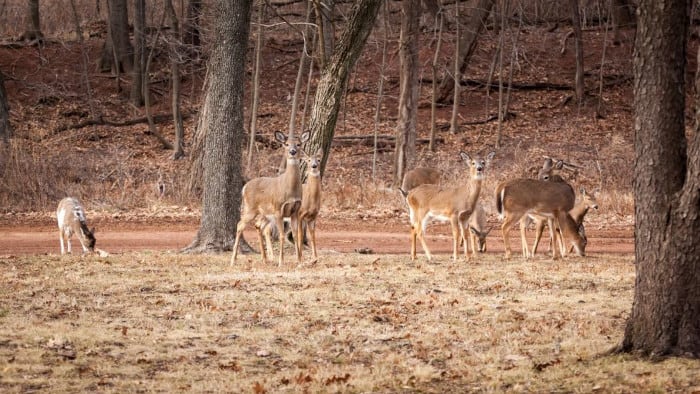
Food Plot Tips – How To Get The Most From Your Food Plot
I'm not sure how many Deer Hunters put out a food plot. Whether it's a 1000 square foot opening way back in the woods or a 40 acre field planted with Corn, Soybeans and Clover, I'd say a good portion of Deer Hunters have at one time or another tried their luck with trying to get a food plot to grow somewhere. The mere fact that there are so many varieties of seeds for food plots and companies putting our these seeds is a testament that a lot of people are giving it a try. Hopefully these food plot tips will help your plot become a deer magnet.
I can remember when Whitetail Institute started promoting their clover blend. At that time, planting high dollar food plots of clover was unheard of, or at least it was in my neck of the woods. The second year after hearing about this Super Clover Seed Blend that attracted Whitetail Deer from afar, I decided to give it a try. Early September found me pushing and pulling a push mower through the woods to a small opening I had permission to hunt. The tall weeds and grass in that little clearing nearly killed me and the mower before I had it all mowed down.
Next, I raked up all the grass and put it in a pile. Then the next day (I was pretty much whooped after using a push mower for a brush hog!), I pushed and pulled a tiller down to the small clearing. When I say small, I mean it was a place of about 20 feet wide by about 100 feet long. I tilled that ground over several times and it was much more difficult than the mowing was!
The next weekend I took a rake, several bags of lime and a bag of fertilizer through the woods to my "food plot". I worked this all in, which took me about a half a day. Rain was in the forecast so I wanted to wait for it to "wash in" the lime and fertilizer. A few days later after the rain I went back and I raked the soil again preparing the seed bed. Hmmm, this is a lot of work. "Poor men have poor men ways" came to mind as I was reraking this little plot. Once finished, I planted the Whitetail clover with visions of big bucks falling over one another to get to my tiny little plot back in the woods. After the seed was cast, I then reraked the area once again covering the seed up.
Unfortunately no one told the big bucks about my little plot! I did kill a Doe and 7 point buck out of that little meadow, but chances were good they used the place anyway since it had produced for me in the past.
From that little plot to ones I've planted that measured an acre or two, I've learned a few things about planting food plots for deer.
Here are some food plot tips to keep in mind before you start trying out your green thumb.
- Get a soil test. I can't stress how important this is. A soil test will tell you the condition of the soil, along with what you need to do to improve it for the type of seed you'll be planting. It will also tell you how much lime and fertilizer to use. Lime and fertilizer is very important for a great food plot. It may mean the difference between you pulling deer from your neighbors land or them pulling deer from your land.
- Match the type of seed to your local area. Some areas grow certain types of plants better than others. I mentioned using Whitetail Institute's clover when it first came out. That was all there was available at the time. It's my opinion that this clover is hard for me to grow in my area. I've had more failures than successes with this type of seed in remote plots. Now there is a whole category of seed that will grow with little soil preparation. From what I've seen, most of these seeds are rye.
- Prepare the soil properly. This is where I see a lot of people goof up. You'd be surprised at how many people will lay down hard earned cash for a bag of seed and then just go out and throw the seed on the ground and expect it to grow. Rye will grow thrown on top of the ground as will winter wheat and oats. But they both will do better if you can at least rake the soil and turn it up a bit. Clover and Alfalfa need covered to be successful. If you're going to spend the money on good seed, then put forth the effort to get the most out of it.
- I prefer to plant in long and narrow strips. Deer love to walk while eating. That's why they're called browsers. A nip here, a bite there. You'll seldom see a deer stand in one place very long. Make it comfortable for them to feed at your food plot.
- Make sure your spot gets at least 50% of sun per day. You may have to hunt out a small opening, but game seeds don't grow well in the shade!
- Plant a variety of seed to prolong the benefits of your plot. I like to plant seeds that will be beneficial to deer as soon as they come up in the early fall. At the same time, I usually include winter wheat or oats along with brassica (greens) so the plot will be beneficial to the deer and other wildlife up into the Winter. Your plot should be more than just a place to kill deer, it should be a place that helps deer and other Wildlife through the Winter into the Spring. By helping your deer make it through Winter in good shape, the Bucks will have a head start growing their antlers and the Does will give birth to healthier fawns.
Food plots do not have to be massive fields of exotic seeds to benefit Deer and wildlife. We don't all have huge John Deere tractors with all the implements along with seed companies throwing tons of seed at us so we'll advertise them. Even if you're not a so called deer hunting celebrity, you can help the animals in your area by planting your own food plot. These food plot tips should help you get started.
Filed Under Deer Hunting | 2 Comments
Tagged With Deer Hunting, food plot tips, food plots, food plots for deer, how to plant food plots
Comments
2 Responses to “Food Plot Tips – How To Get The Most From Your Food Plot”
Leave a Reply

using corn turkeys r eating it a fast as put it out whaat can i use thats cheap.
I am having the same problems! Corn is gettin eatin out way too fast.